
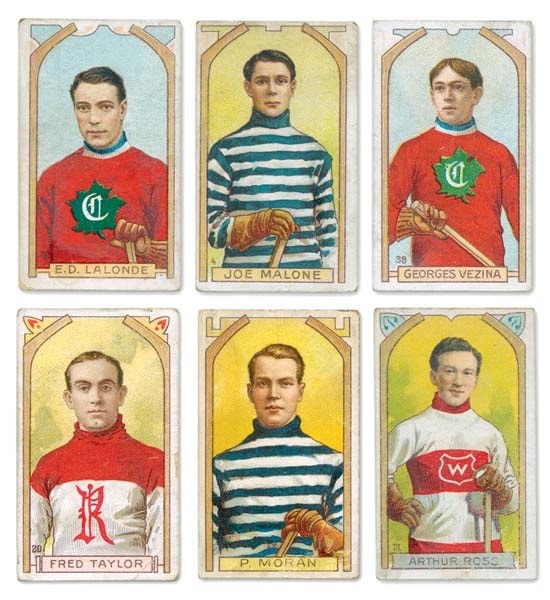
Cards from the 1911-1912 Imperial Tobacco C55 National Hockey Association (NHA) Hockey Players set. These cards are one of the many ‘cigarette cards’ released during this time period. Within the hockey card industry, this set is one of the “Three C’s” of cigarette sets produced during this time period and predate the NHL. The Three C’s refer to the C56, C55 and C57 hockey card sets produced by the Imperial Tobacco Company.The history of NHL hockey cards is a fascinating one, and it’s a story that actually pre-dates the NHL altogether.
In this article, I’m going to write about some of the first few hockey card sets that ultimately paved the way for the modernized hockey card industry we see today. Although these cards are far and away from the 2015-16 Upper Deck Connor McDavid Young Guns and other impressive cards we currently see, these tiny pieces of cardboard, highlighted below, slowly crafted a big market of the current sports card industry.
The Beginning of Hockey Cards: 1910-1911 C56 Imperial Tobacco
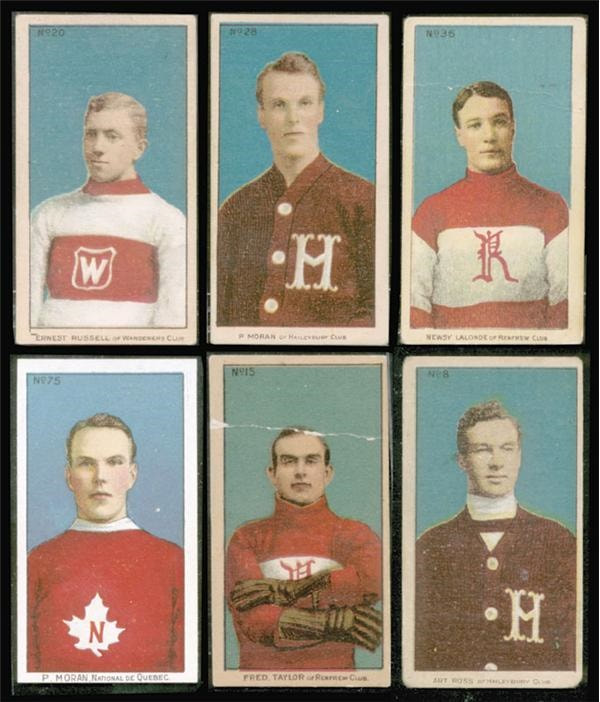
The 1910-1911 Imperial Tobacco set is the first major issue of hockey cards. These cards, which predate the NHL, feature players from the National Hockey Association (NHA) and were distributed inside packs of Imperial Tobacco cigarettes in order to produce more sales. Author’s Note: The bottom-left P. Moran in this lot is from the 1910 C60 Lacrosse set.The iconic 1910-1911 C56 hockey card set, produced by Imperial Tobacco Canada, is the very first major issued set of hockey cards that was released nationally. There have been early depictions of ice hockey going back to the late 1800’s & early 1900’s, but this was the first legitimate set of trading cards to feature individual players in a professional hockey league.
Since this C56 set predates the NHL, this set of cards feature popular players from the National Hockey Association (NHA), a league that spanned from 1909-1917 before disbanding during the first World War.
The C56 cards were stored and distributed inside packs of Imperial Tobacco Company of Canada Limited cigarettes. Below is an example of what those cigarette boxes looked like at that time. These would become the first ever “packs” that contained hockey cards.

A Sweet Carporal cigarette box used to distibute the very first national set of hockey cards in 1910. These packs were manufactured and distributed in Canada by the Imperial Tobacco Cigarette Company.C56 cards were distributed inside boxes of Imperial Tobacco cigarettes primarily as a marketing initiative. This initiative allowed the cigarette company to market their tobacco products to younger and old consumers, increase their cigarette sales, and to differentiate themselves from the competition at the time. As innovative as this tactic was, these cards were very time consuming and costly to produce. The C56’s were produced from a hands-on photolithographic process in which a photograph was reproduced by an artist, on a stone, then printed.
1911-1912 C55 Imperial Tobacco Cards
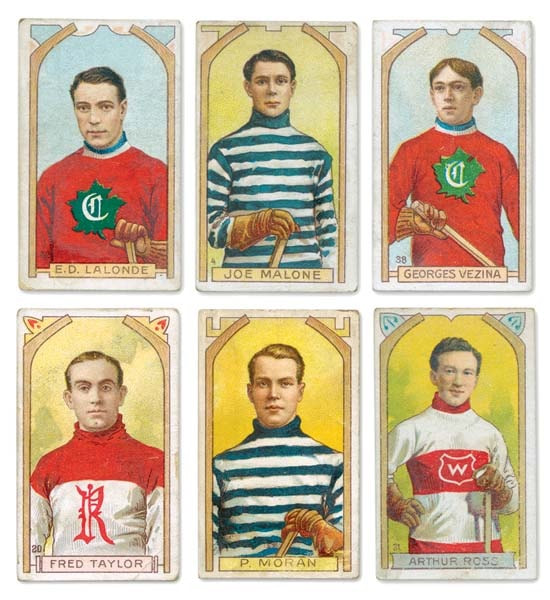
The 2nd year run of the Imperial Tobacco National Hockey Association (NHA) hockey cards depict some of the league’s players with beautiful, bright and bold coloured imagery, which was quite the feat at the time considering the large-scale distrubution of these cards. The C55 card design remains one of the most popular pre-war card designs to this day.Arguably the most visually recognizable pre-war sports card, the C55’s are bursting with colour and were very tricky to produce.
The C55’s are the first hockey card set to be created with chromolithography, a printing technique that was very difficult to perform at the time and was crafted using Bavarian limestone.
This artistic technique, coupled with the original artwork used for the cards’ printing process, produced a quality of cards that was unparalleled to anything else released during this time period.

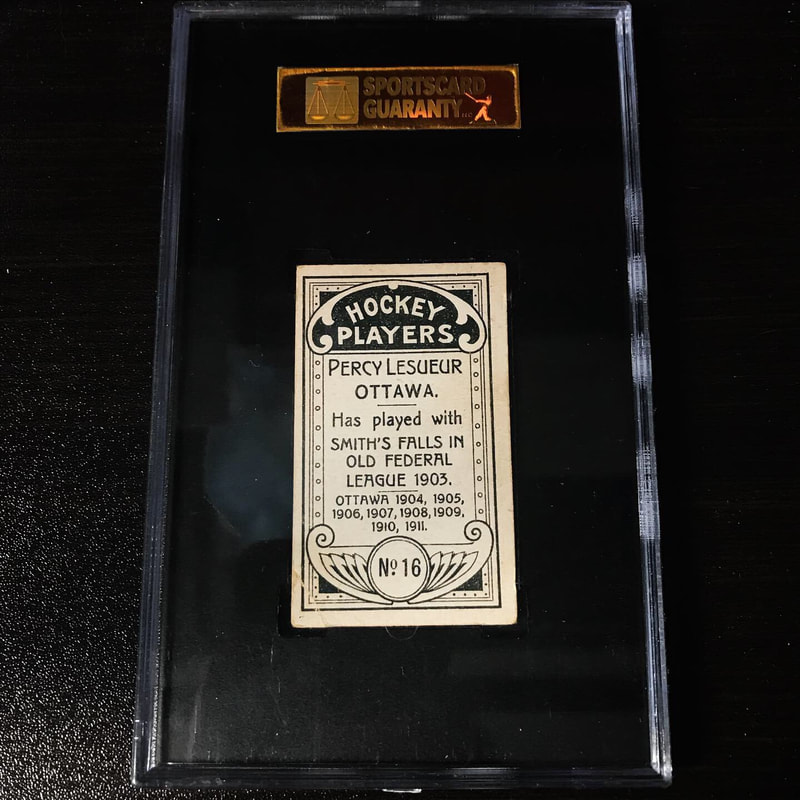
Pictured above is my personal copy of an original Percy LeSueur card (Graded a 3 by SGC) from the 1911-1912 C55 Imperial Tobacco set.
Back By Popular Demand: 1912-1913 C57 Imperial Tobacco
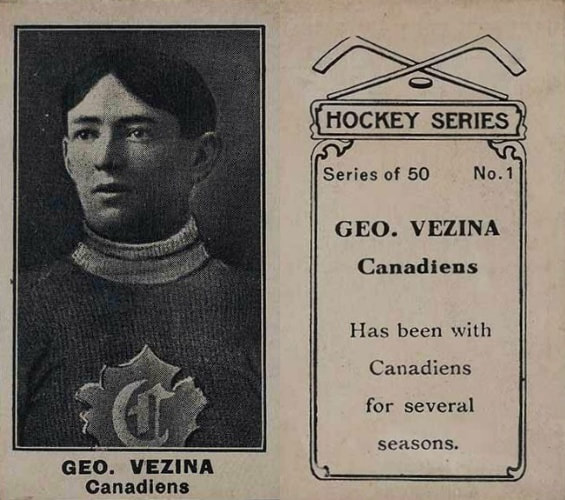
A Front & Back image of a 1912-1913 Imperial Tobacco hockey card (Georges Vezina – Montreal Canadiens of the NHA).The 3rd and final year of production of Imperial Tobacco cards was the C57 Hockey Series set in 1913.
These cards, while simple in nature, would be the last set Imperial Tobacco would produce and signal the end of an era for the company that officially brought hockey cards into the world. A humbling end from what was a revolutionary beginning.
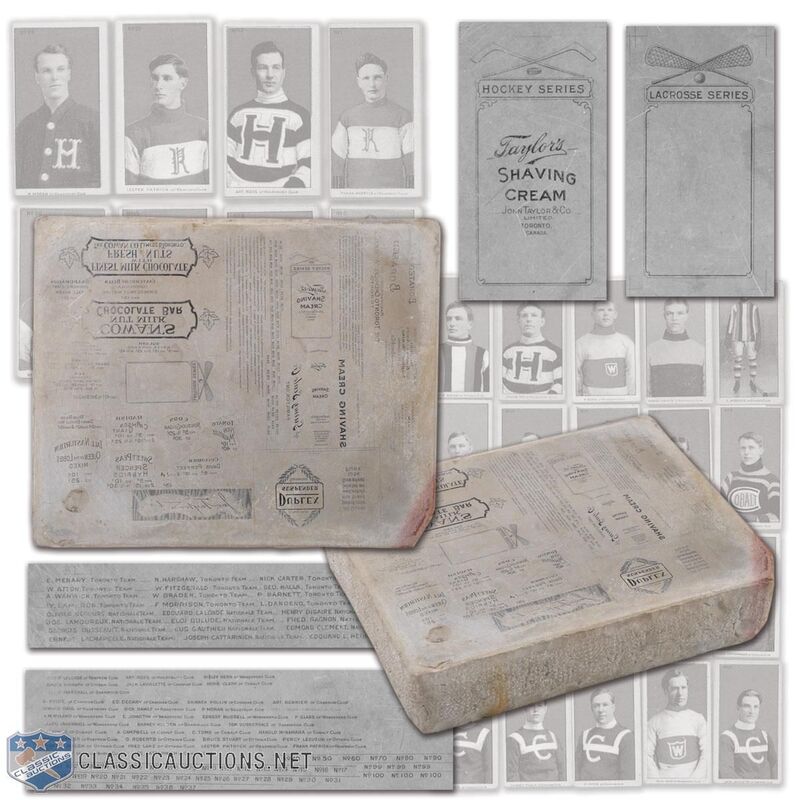
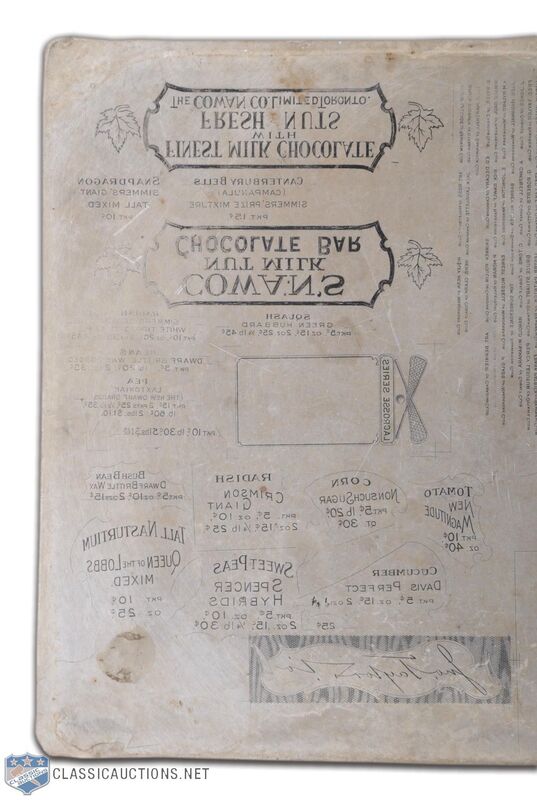
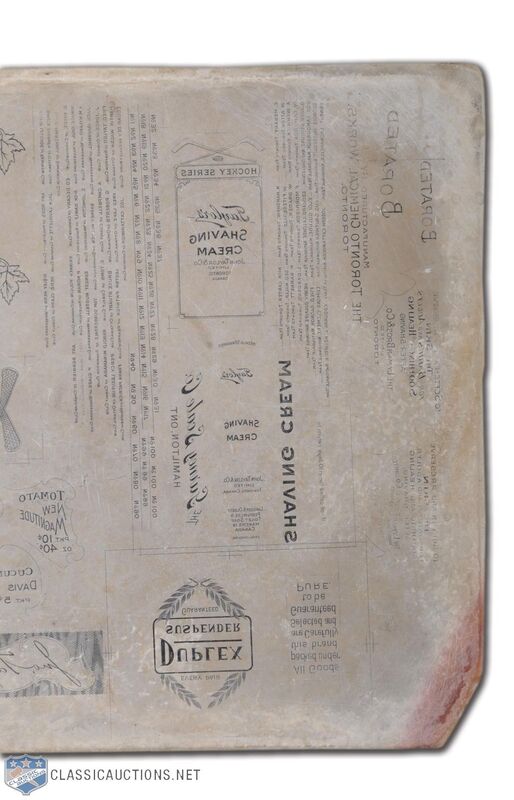
One of the limestone printing stones that was used to create the 1910 C56 hockey card set.
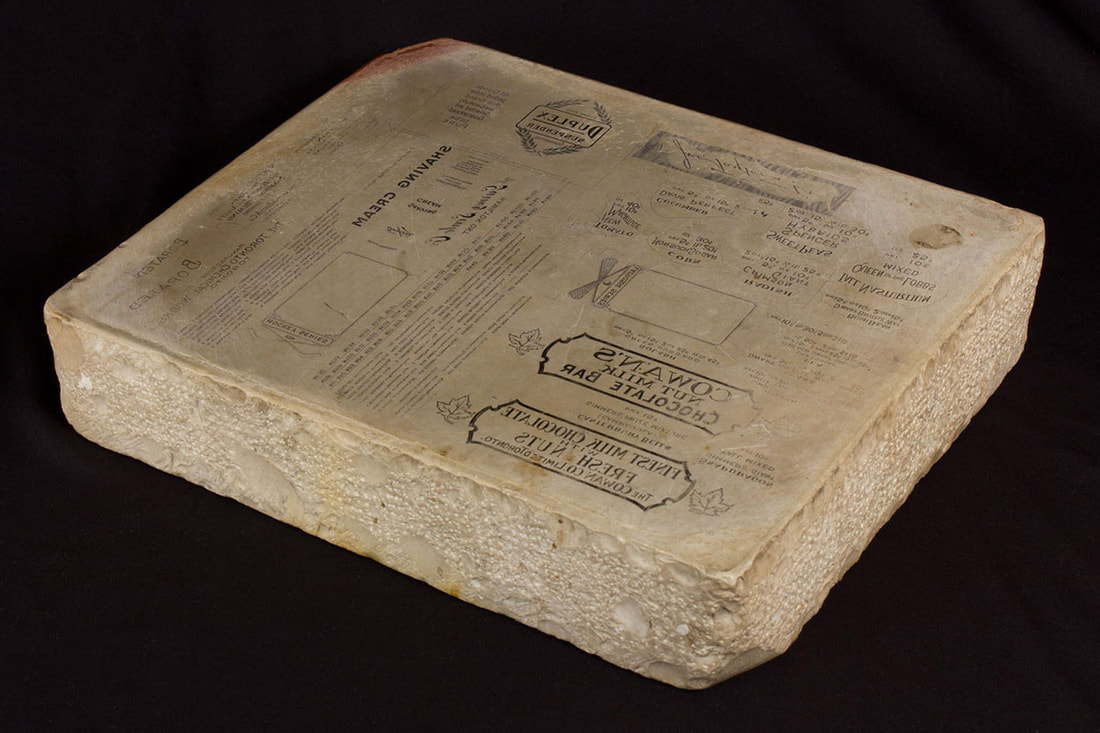
An original printing stone used in the production of the C56 Imperial Tobacco hockey cards in 1910.
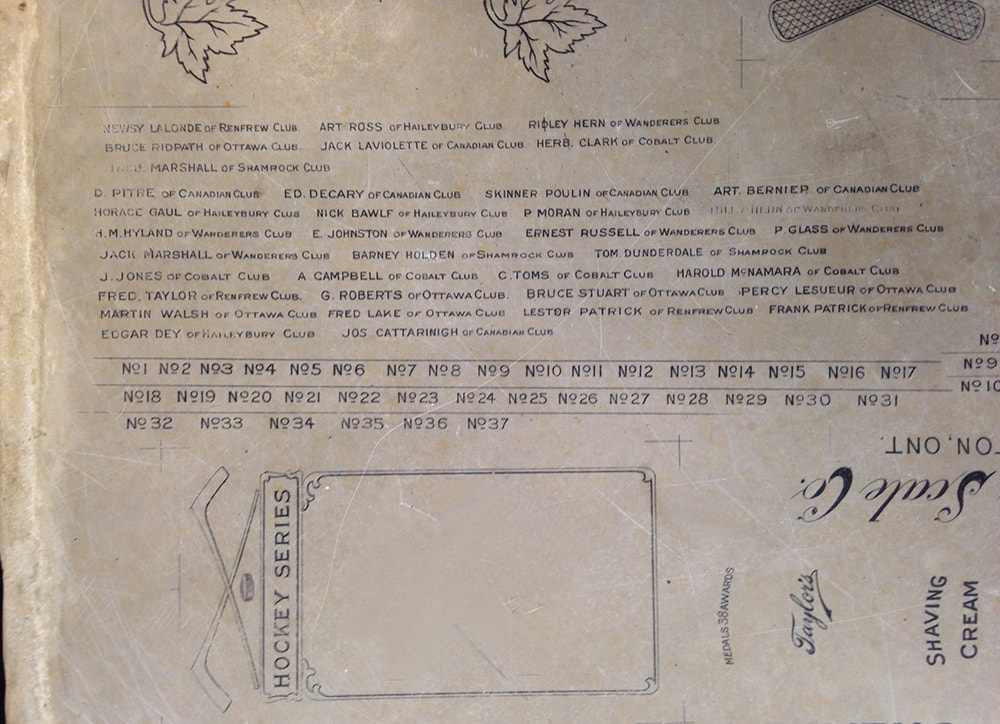
Up close and personal: A closer look at an original lithographic printing stone used to product the 19010-1911 C56 Imperial Tobacco hockey card set. An iconic piece of hockey card history.
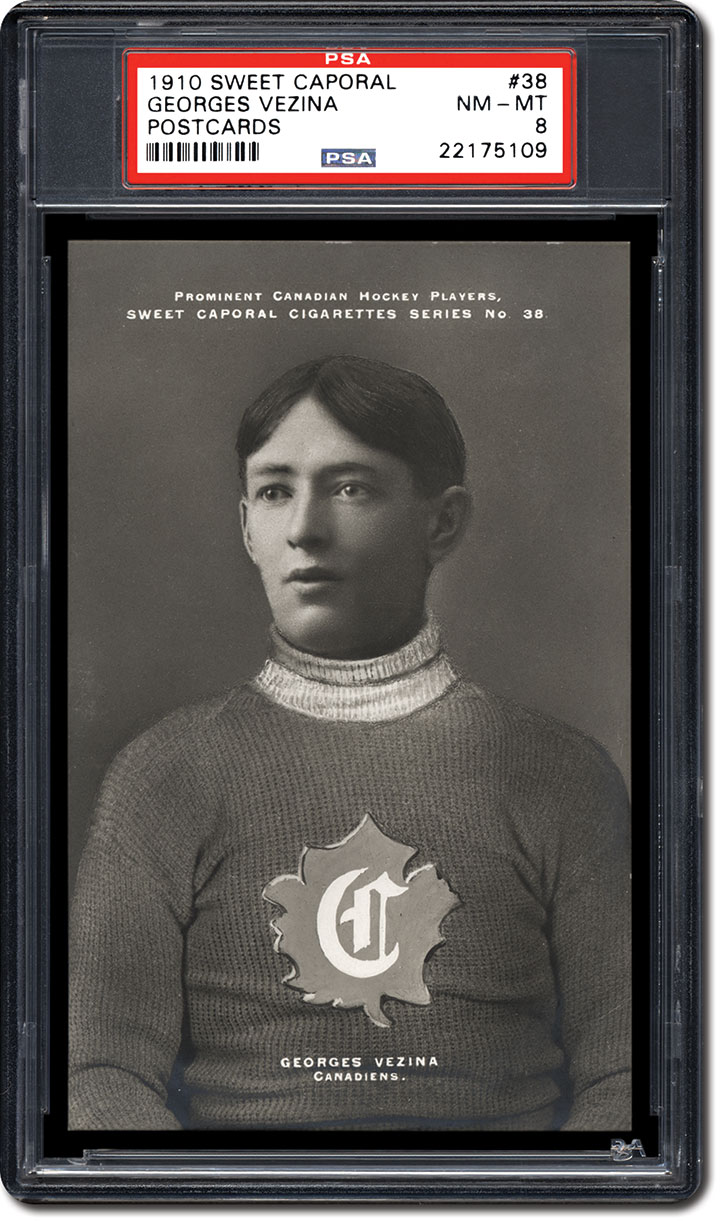
The original photography used in the production of the 1910 Sweet Caporal Cigarretes Postcard set was also used for the production of the C57 card set in 1912-13. The very same photograph was also transformed into art form to be use for the C55 set from the previous year.After the impressive 3-year run of hockey cards produced by Imperial Tobacco, the existence of hockey cards would cease to exist altogether after 1913, due to the high costs associated with manufacturing these cards, and the start of the 1st World War, otherwise known as ‘The Great War’.
At this point in the game, this was the end of hockey cards as we know it.
The End of The Cigarette Card Era: 1924-1925 C144 Champs Cigarettes

Cards from the 1924-1925 C144 Champs Cigarettes set are one of the the last known set of hockey cards to be packed out with cigarettes. An end of an era for the cigarette companies and these ‘cigarette cards’ would spark other manufactering industries to follow in their footsteps in the years to follow before the start of World War ll.After World War l and the creation of the National Hockey League (NHL) in 1917, hockey cards would finally make a return in 1920’s, most notably with the 1924-1925 C144’s, produced by Champs Cigarettes. This would turn out to be the final ‘cigarette card’ set ever made.
Although this was the end of an era for these cigarette companies and their impact on the hockey card market, the marketing tactics they employed in order to sell more cigarettes would pave the way for other companies to follow in their footsteps when it came to producing these desirable pieces of cardboard.
More Manufacturers Start Producing Hockey Cards Throughout the 20’s and 30’s
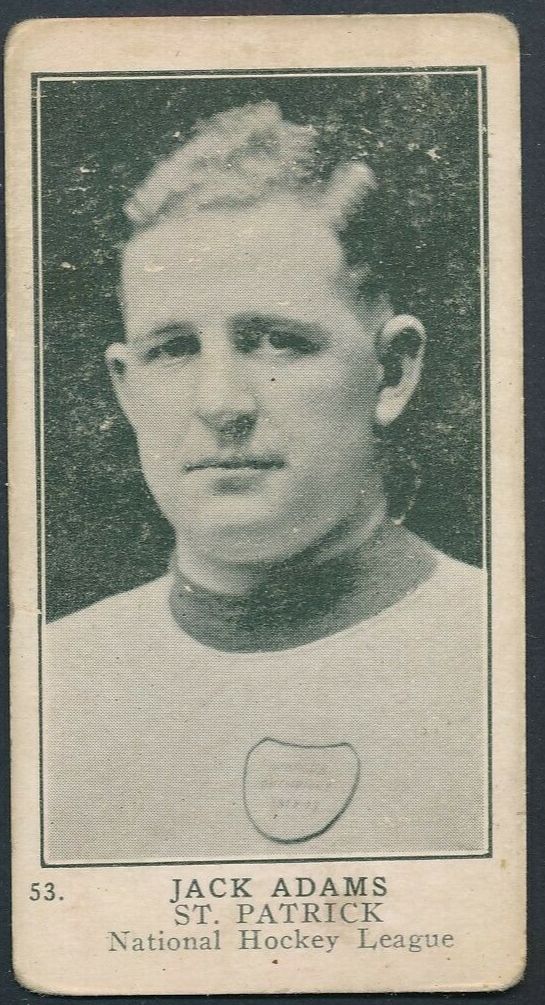
1923 V145 William Patterson Candy Company Limited #53 Jack Adams
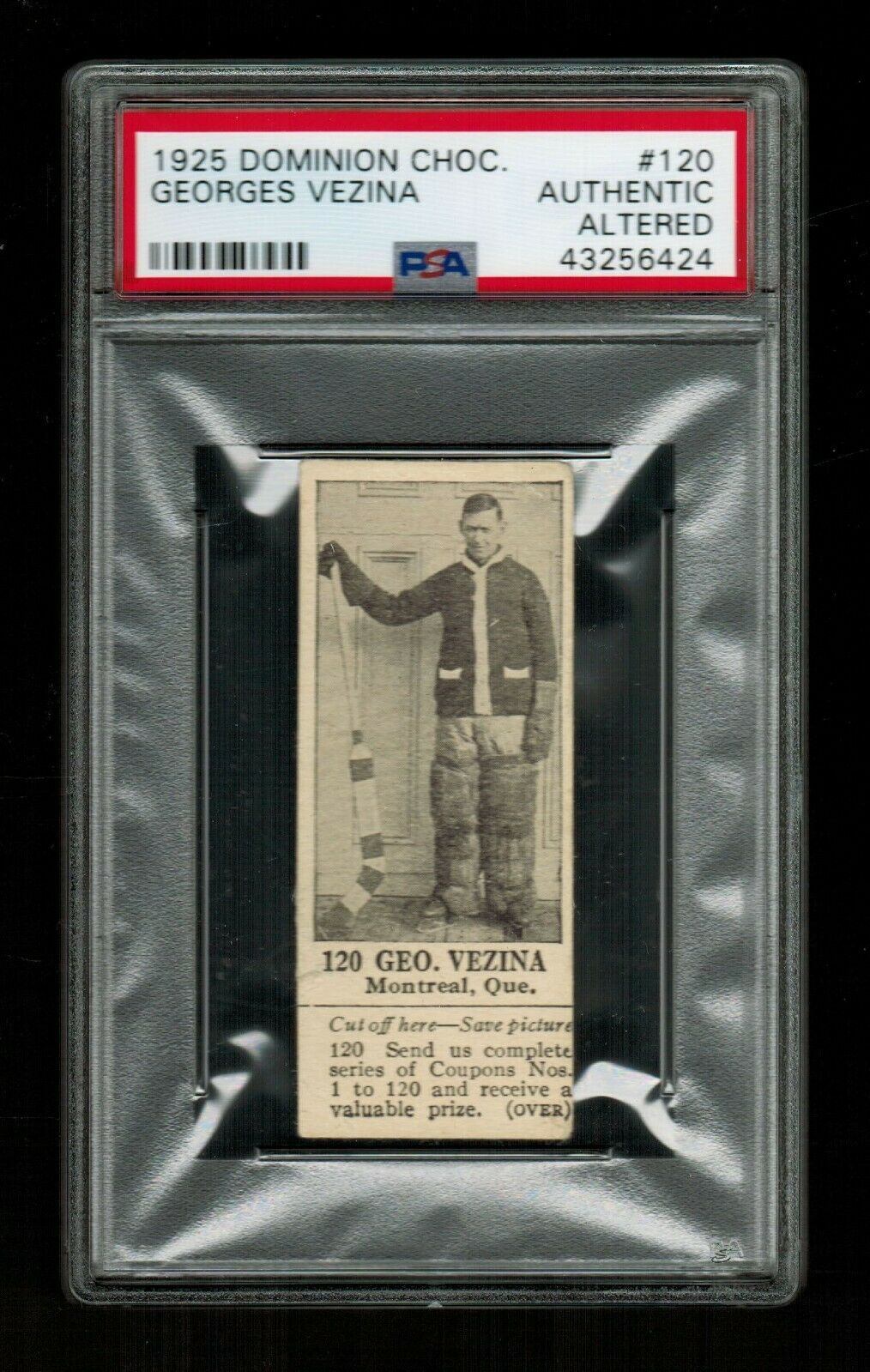
1925 Dominion Chocolate Company Ltd. #120 Georges Vezina
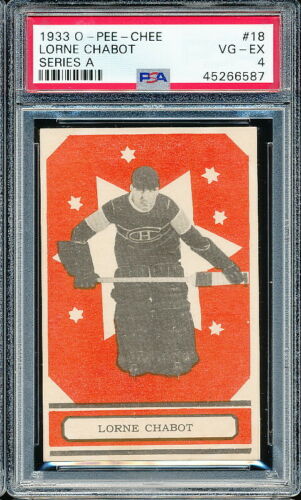
1933 O-Pee-Chee #18 Lorne Chabot (Series A)
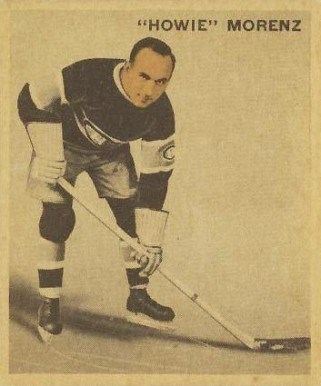
1933-1934 V357 Ice Kings Gum #36 Howie Morenz
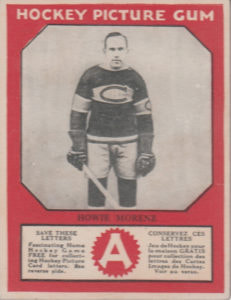
1933-1934 V252 Canadian Chewing Gum Ltd. Howie Morenz.
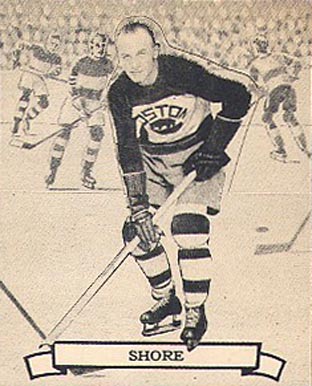
1936 V304D O-Pee-Chee #118 Eddie-Shore
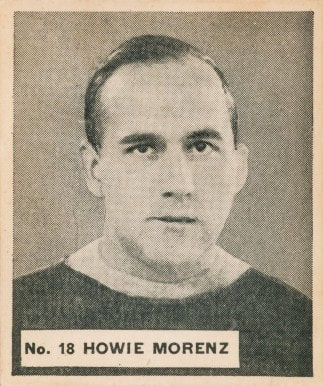
1937 V356 World Wide Gum #18 Howie MorenzOver the course of the mid-to-late 1920’s and throughout the 1930’s, hockey cards were manufactured by chocolate, gum and other confectionary manufacturers in order to entice the younger generation into buying more of their products instead of the competition. Spoiler alert: It worked.
One notable brand who entered the fold was the O-Pee-Chee Gum Company, who initially started to produced cards from 1934 until 1938. O-Pee-Chee’s early introduction into hockey cards make them one of the oldest sports card manufacturers who are still represented in NHL hockey card products to this day.
Some cards during this time period were a part of sweepstakes or giveaway contests. For example, the 1933-1934 Howie Morenz Canadian Chewing Gum Limited card, the circular letters (pictured at the bottom of the card) could be ripped off and then sent back to the company. The collectors who spelt out complete team names and sent their submissions through the mail in time would receive a prize.
Much like the first World War, hockey card efforts were once again halted completely due to the start of World War ll in 1939.
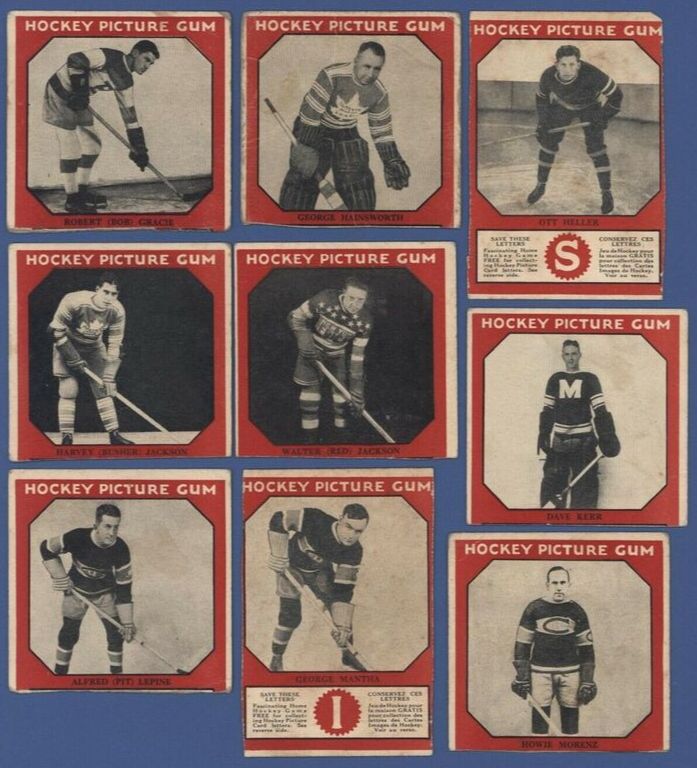
Some examples of 1933-1934 Canadian Chewing Gum cards which the letters have been cut off the bottom of the card in order to participate in the mail-in contest Canadian Chewing Gum was hosting at the time of release.After World War ll, hockey cards were non-existent until the start of the 1950’s.
A Dawn of A New Era: 1951-1952 Parkhurst
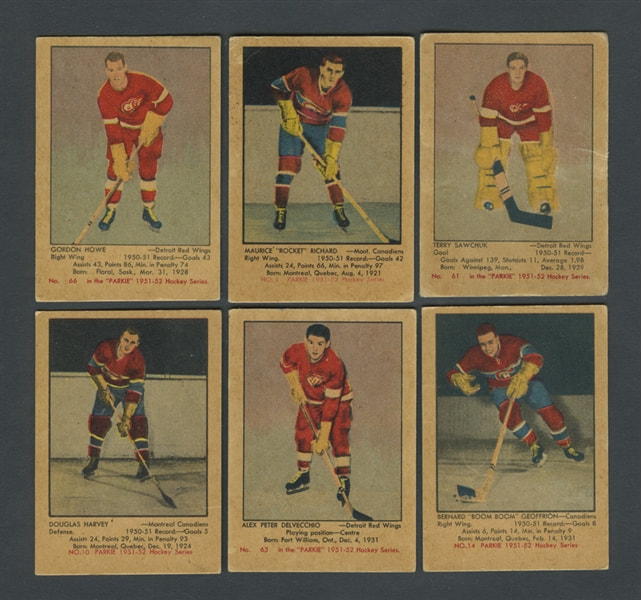
1951-1952 Parkhurst Hockey is largely credited with being the first set of “Modern” hockey cards, as they were the first card set to be completely distributed in actual hockey card packs, much like we see today. This set would go onto cultivate the hockey card industry from here on out. 51-52 Parkhurst holds some key rookie cards of Gordie Howe, Maurice Richard, and Terry Sawchuk, among other notable names in the set.After World War ll, Parkhurst (Parkies Hockey Bubble Gum) was the first company to produce hockey cards.
This set from the early 1950’s would prove to be revolutionary in the decades to follow, as Parkhurst was the first manufacturer to distribute hockey cards in actual hockey card packs, much like we see today. This manufactering effort by Parkhurst would spark the continual creation of NHL hockey cards moving forward, further developing the card market, one that would eventually develop into the multi-million dollar hockey card industry we all participate in today.
Original 1951-52 Parkhurst ‘Parkies’ Hockey Bubble Gum packs can still be found today and are very desirable for their place in the vintage card market, but also due to their historical significance in the hockey card industry.
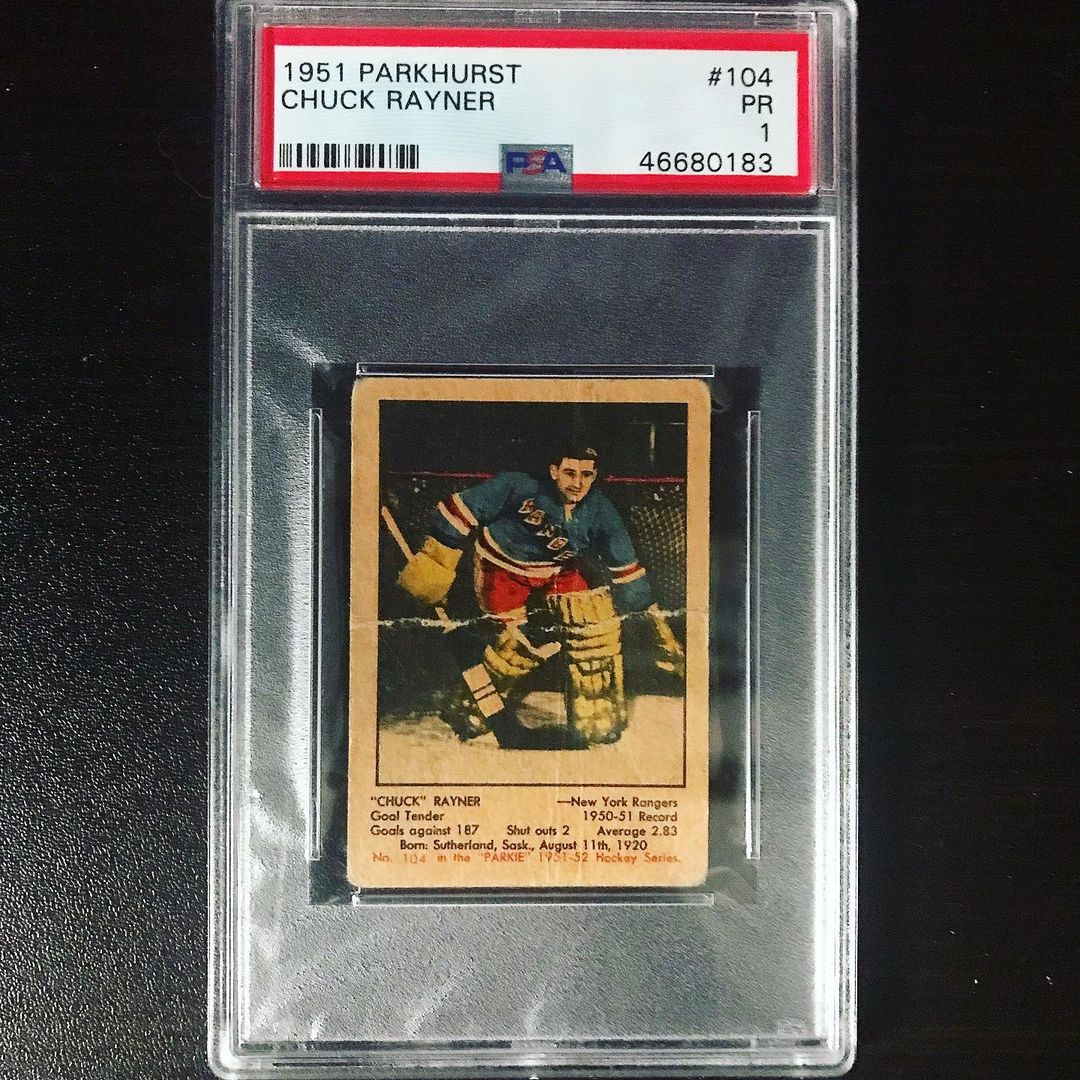
My personal copy of Chuck Rayner’s rookie card from the 1951-52 Parkhurst Hockey Card set.
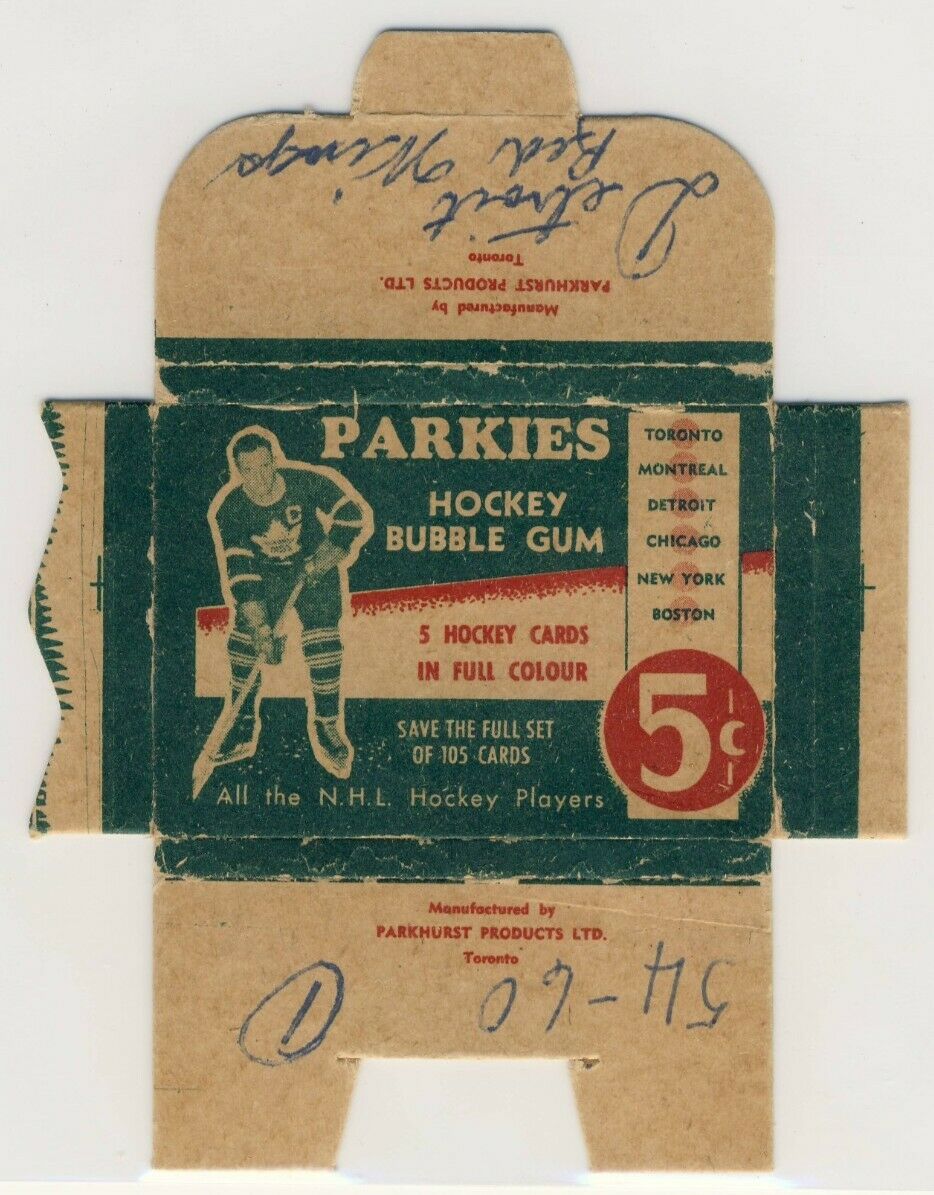
An original 1951-52 Parkhurst Hockey Card Pack – Front
An original 1951-52 Parkhurst Hockey Card Pack – BackIf you’ve made it this far, I really hope this little article was an interesting read. As a collector since the early 2000’s, I’ve never really appreciated the vintage cards in this hobby until recently. Since then, I’ve been super interested to learn even more about the hobby, the unique origins, and the cards that come with it, of course
 CREASECOLLECTOR
Leave a comment below!